
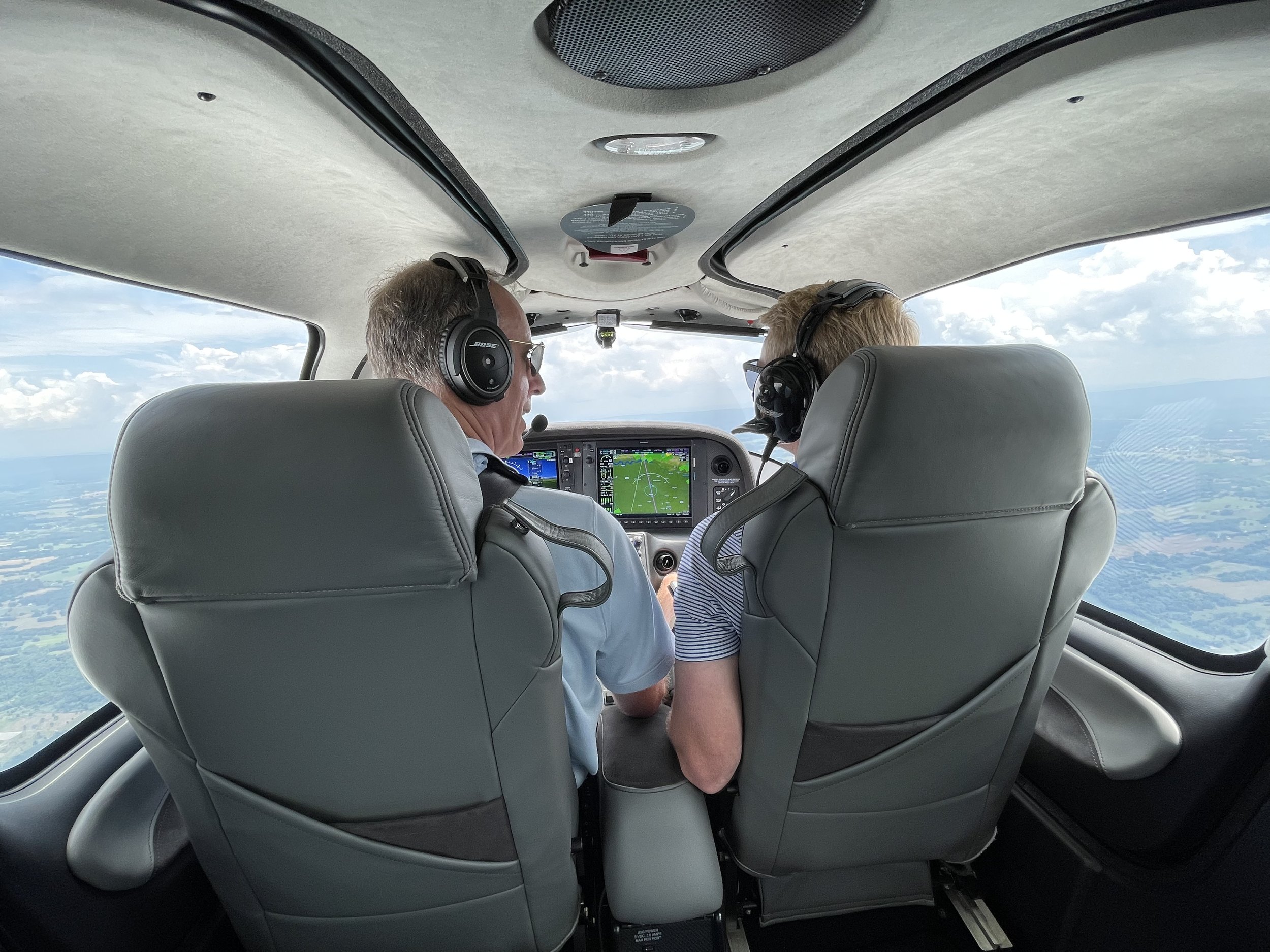
FLIGHT TRAINING
We share the Cirrus profound passion for creating safer airplanes, safer pilots and safer skies. Not just for Cirrus pilots, but all pilots.
flight training
-
This is the license that earns you the right to say “I am a pilot!” Your private pilots license is similar to a drivers license in that it allows you to privately fly yourself and passengers.
-
The instrument rating is often unofficially referred to as the “second half” of your private pilots license and is an add-on to your private pilots license. The primary difference is an instrument rating allows you to fly in different weather conditions. It allows you to fly in the clouds, so the weather no longer has to be perfect in order for you to be qualified to go fly.
-
Aerobatic instruction will make you a better “stick and rudder” pilot because it will deepen your understanding of what makes an airplane fly and then reinforce that knowledge when you are flying loops and rolls. Spin training is only required training for Certificated Flight Instructor applicants- but we highly recommend this training for all pilots. At OpenAir we also include Upset Recovery training for anyone getting instruction in aerobatics or spins. Tailwheel transition training is also available for those pilots who want the challenge and satisfaction of “taming a taildragger.” The techniques you learn in becoming a competent tailwheel pilot will also make you more proficient at landing your Cirrus. OpenAir is fortunate to have a fully aerobatic Super Decathlon aircraft in our fleet and a very experienced instructor to teach you the techniques that will make you a safer and more skillful pilot.
-
The commercial license is similar to a commercial drivers license in that it is extra, slightly more rigorous training that is required in order for you to be paid to fly. If you are considering aviation as a career, this is a step you will need to eventually take. Please note that your do need to start with your private pilots license before you can continue on to your commercial license.
-
Becoming a CFI means sharing the knowledge you have gained throughout your training with others. It is also a great way to build time if you are seeking a career flying larger aircraft.
-
At OpenAir, our instructors are experienced and capable of teaching and assisting in specialized areas. Some of this specialized flight training includes operation of the Cirrus’ FIKI system, and the ins and outs of making your way through icy instrument conditions, or perhaps you want some guidance on how to best avoid other hazardous weather while flying, such as thunderstorms. We can provide training into complex airspace, such as class B, or SFRA airspace. Perhaps you are interested in flying internationally, or in and around the mountains. Whatever your flight training needs, our instructors are standing by to help you become the best pilot you can be.
You’ve got questions, we’ve got answers
WHERE DO I BEGIN?
This 1-2 hour introductory flight lesson allows you to experience the joy of flying an aircraft for the first time. Casual and pressure-free, it’s a great place to start when considering a private pilot’s license.
Discovery Flight
The start of your piloting career begins by earning this license. Prepare to spend 4-6 months with a flight instructor as you learn the basics for confident flying.
Each certificate and rating you earn will require a written test, as well as a checkride with a Designated Pilot Examiner, which includes an oral and a flight portion. These evaluations will test your skills on the training you have completed with your flight instructor, which includes general handling of the aircraft, certain maneuvers, and the ability to proficiently takeoff and land in varying conditions.
Private pilot license
After you’ve earned your private pilot license, you can begin instrument training. Adding this rating to your pilot’s license is a worthwhile investment. It rounds out your piloting skillset and unlocks some privileges that allow you to fully utilize your aircraft's capabilities.
The skills that will be evaluated on your instrument checkride will include the ability to fly solely by reference to the instruments in the cockpit, as well as flying approach procedures that will allow you to land in cloudy conditions.
Instrument training
you’re already a pilot
If you’re looking for a way to level up your training, look no further.
Cirrus Transition Training
If you know how to fly but don’t know how to fly a Cirrus, we can assist. Our transition training is designed for licensed pilots to transition into flying a Cirrus for the first time. You’ll focus on aircraft control, engine management, avionics procedures and abnormal situations in VFR conditions.
Instrument training
Instrument training rounds out your piloting skillset and unlocks some privileges that allow you to fully utilize your aircraft's capabilities.
Aerobatic and Tailwheel
While spin training is only required for Certificated Flight Instructor applicants, we highly recommend the training for all pilots who are looking to sharpen their skills. While the Cirrus Aircraft spin recovery technique involves use of the airframe parachute (CAPS), a Cirrus Aircraft is an airplane and is subject to same laws of physics as other airplanes, hence the importance of understanding aerodynamics and the importance of good, foundational stick and rudder skills, in whatever airplane you are flying.
At OpenAir we also include Upset Recovery training for anyone getting instruction in aerobatics or spins. Tailwheel transition training is also available for those pilots who want the challenge and satisfaction of “taming a taildragger.” The techniques you learn in becoming a competent tailwheel pilot will also make you more proficient at landing your Cirrus. OpenAir is fortunate to have a fully aerobatic Super Decathlon aircraft in our fleet and a very experienced instructor to teach you the techniques that will make you a safer and more skillful pilot.

We get it, this is a lot of information.
Overwhelmed?
Not sure where to start?
Want to talk to a real person?
We’re here to help.